17th December 2025
Cementing Childhood Obesity as a Priority Across Political Mandates
Insights from the Second Obelisk Policy Workshop
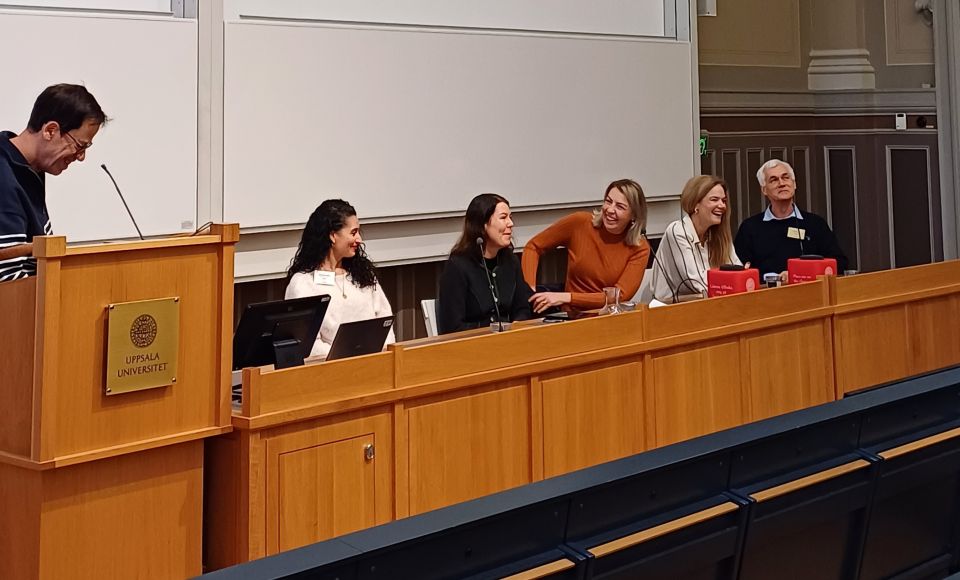
The European Childhood Obesity Group (ECOG) hosted a policy workshop during its 34th annual congress in Uppsala, Sweden, in November 2025. This was the second edition of the policy workshop series organised in the framework of the Obelisk project.
Moderated by Philippe Froguel, Professor and Chair of Genomic Medicine at Imperial College London, Professor of Endocrinology at Lille University Hospital, and Co-Coordinator of the Obelisk Project, the roundtable featured an exceptional panel of expert speakers from a diversity of stakeholder groups across local, regional, national, and European levels of governance, including:
- Karolin Lundstrom, Uppsala Municipality
- Peter Bergsten, Uppsala University
- Mahnoush Etminan, Swedish Food Agency
- Emilie Orring, Moderaterna Party
- Lovisa Sjogren, University of Gothenburg
Prompted by the moderator, the speakers addressed the many challenges to creating effective policies to combat childhood obesity, as well as opportunities to overcome these. Three key takeaways emerged from this discussion:
- Addressing childhood obesity must be a non-partisan priority. Successful policies addressing childhood obesity need time and consistency to produce positive change. To achieve this, childhood obesity must be made a priority that transcends political orientations and extends across political mandates. Speakers shared good practices from Sweden, where an unspoken political consensus has emerged over the years and translated into a sustained commitment across all parties to address childhood obesity.
- Strengthened collaboration across governance and across disciplines levels is crucial. Ensuring better coordination between the federal, regional, and municipal levels of governance is a prerequisite to making policies effective. While the regional and local levels are best positioned to know and support their populations, they must have the support and resources from higher levels to bring the right interventions to life. Similarly, speakers highlighted the need to better connect policymakers to scientists and researchers who can provide the technical insights and specific expertise they may lack when designing policy interventions.
- Childhood obesity is not just a medical problem. Policies and interventions that focus only on childhood obesity via an individual-level, medical lens will fail to produce sustainable and systemic change. Speakers highlighted the role of socioeconomic inequalities, urban planning, social media, education policy, and many more, in shaping the health outcomes of children and young people. The challenge of childhood obesity requires policymakers to look to factors such as lived environments, and how they can better encourage movement; stigma and social alienation; accessibility of sports or nutritious food choices to vulnerable groups; and even the impact of social media and new forms of entertainment. Effective policy frameworks must prioritise these elements.
The roundtable underscored the need for policymakers to solidify childhood obesity as a long-term, non-partisan priority and to address the issue with a coordinated, multi-sectoral, and holistic approach. The discussion builds upon last year's edition of the Obelisk Policy Workshop, held in Ghent during the 33rd annual ECOG congress, during which speakers also highlighted the importance of multidisciplinary and multi-level policies.
Moving forward, the European Childhood Obesity Group and the Obelisk Project are committed to continuing this dialogue and advocating for more effective policies prioritising children’s health. A third edition of the policy workshop will be back next year at ECOG’s 35th annual congress in Salzburg, Austria.
