
Obelisk Data Catalogue Now Live
One of the project’s key outputs is now publicly available via the Obelisk website. The Obelisk Data Catalogue – a catalogue of metadata from seven European cohorts in the Obelisk project - enables FAIR (Findable, Accessible, Interoperable, Reusable) data access for other researchers, encourages cross-cohort analysis and facilitates collaboration with other EU networks.
The catalogue includes data from longitudinal cohorts and clinical studies from early life onwards (parents and their offspring), enriched with biological, social, economic and health-related variables (including health consumption), focusing on childhood obesity.
Catalogue Functions
The Obelisk Data Catalogue consists of the following functions:
- A findability feature to identify types of data that are accessible for the user and included in the metadata, such as: number of cohorts, type of cohorts (birth cohort, population cohort etc.), number of participants, types of variable available, repeated measures (Table 1).
- A uniform harmonisation system mapping variables across all the cohorts included in the metadata to deal with harmonisation, standardisation and federation of clinical cohorts. This will enable users to identify harmonised variables across all the cohorts.
- Detailed complementary protocols to enable smooth usage of the catalogue for the users and for the analytical processes. This will include standard operating procedures for interoperability of the metadata.
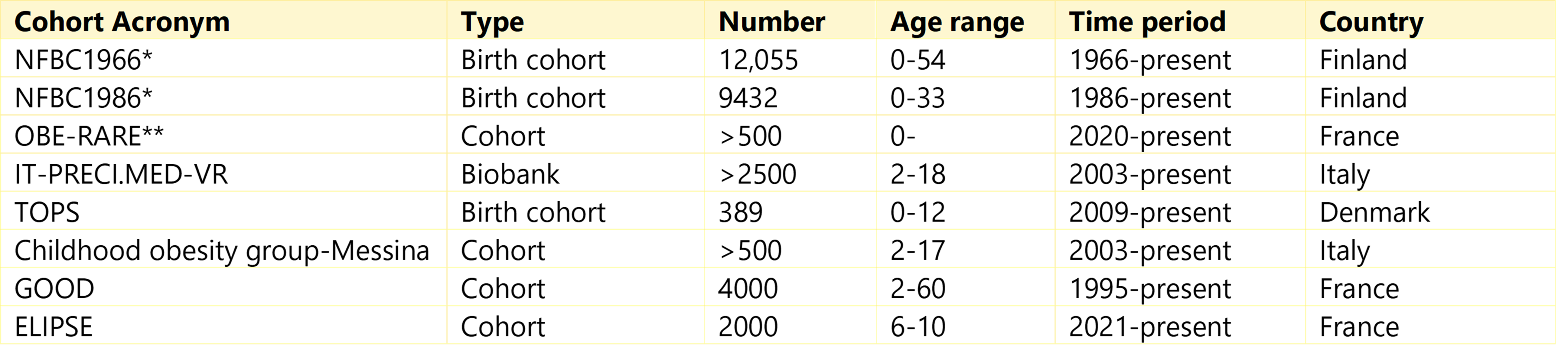
*Northern Finland Birth Cohort (NFBC)
**French Cohort on Obesity
The catalogue only includes information on all the variables available across the participating Obelisk cohorts (i.e. metadata), but not the actual data. The individual-level data is available with the respective institutes and would require permission to access them.
Variables
A vast range of information on types of variables available in each cohort are included from participants (children and adolescents) and their parents, such as, but not limited to:
- Year of birth
- Sex
- Birthweight
- Birth length
- Repeated measures of height, weight and BMI since birth
- Clinical measures including glucose measurement, Hb1Ac, HDL, head circumference, waist circumference, and hip circumference, breastfeeding, age at menarche etc.
- Mother and father's age at birth
- Mother and father's parental death
- History of diseases, e.g., gestational diabetes, asthma
- Behavioural factors, e.g., smoking, alcohol use, physical activity, sleep
- Health status (glucose, HbA1c, cardiovascular events, total cholesterol, HDL, LDL, waist circumference, stress, obesity, OGTT, abdominal circumference, blood pressure, ferritin, triglycerides)
- Socio-economic status (education, income, occupation and employment history, marital status), country of birth, etc.
Key variables are aligned to Observational Health Data Sciences and Informatics (OHSDI) recommended vocabulary, e.g. Systematized Nomenclature of Medicine – Clinical Terms (SNOMED CT), Logical Observation Identifiers Names and Codes (LOINC), Unified Code for Units of Measure (UCUM), to facilitate subsequent harmonisation/federation of cohorts for analysis using Open-Source Software for BioBanks (OBiBa) tools such as Opal and DataSHIELD.
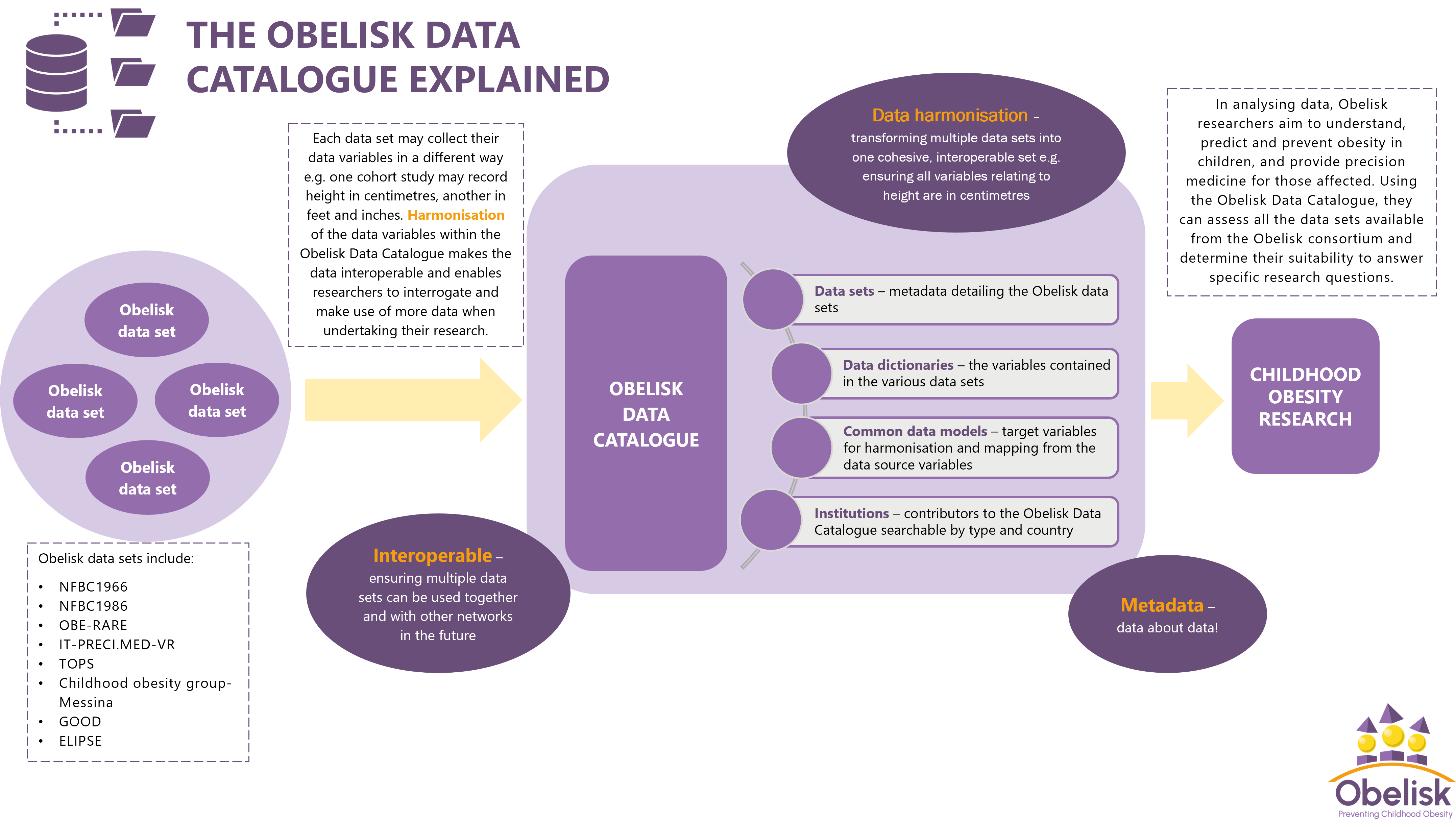
The Obelisk Data Catalogue Explained
For a larger view of this image, please click here.
Access the Catalogue
The Catalogue will continue to be developed as the research progresses within the project.
Access the Obelisk Data Catalogue here.
